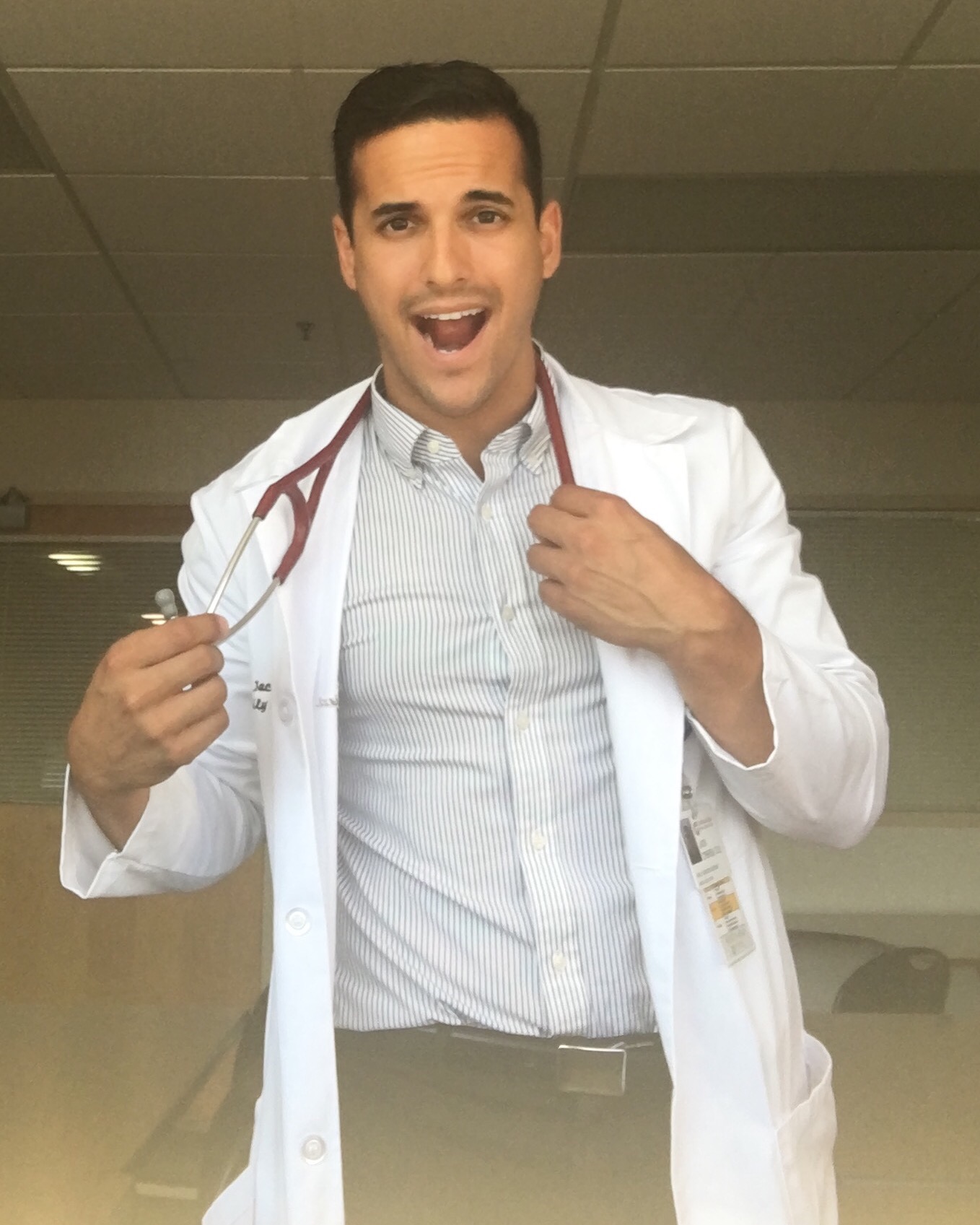
I was fortunate enough to be the key-note speaker at World AIDS day in Jersey City December 1st 2017. I am attaching the speech I gave here for those who were not able to attend. Hopefully some pictures will be posted online in the near future that I will add 🙂
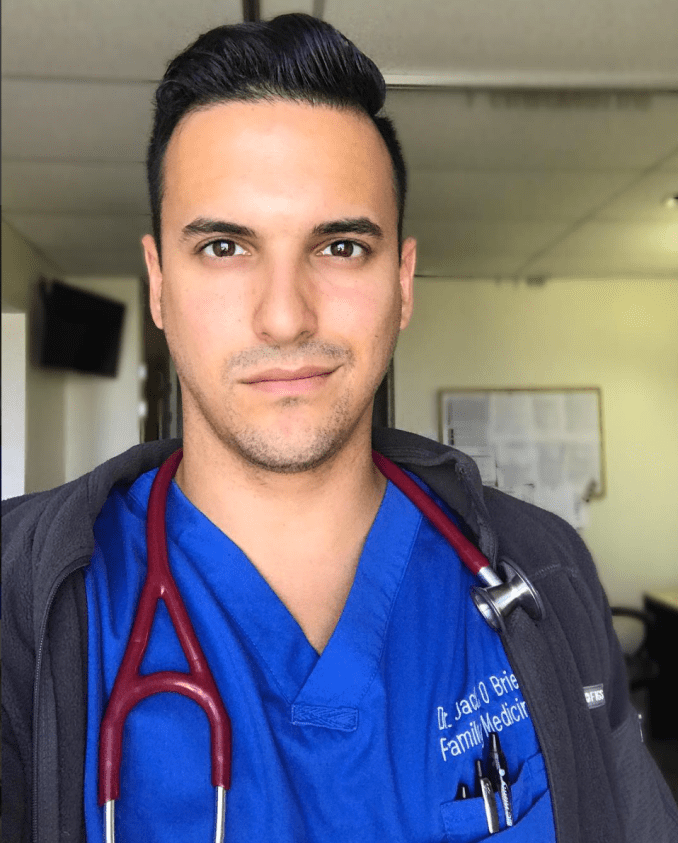
I would like to first thank all of you for inviting me here today to speak at an event that has so much personal meaning to me. For those of you who do not know me, I am Jack O’Brien, a second year family medicine resident at Bayonne Medical Center which is part of CarePoint Health. I grew up in a small town of a little over four thousand people near Syracuse New York, so giving a speech here right next to the epicenter of the entire world, New York City, is quite surreal and I will need to pinch myself right now.
I will be a little bit corny, but first like to give a shout-out to my parents, Judy and John O’Brien, for which none of this would be possible without them. Until I was 18 and left for college, they used to spend over two and a half hours a day driving me to gymnastics, and were also the driving force of me coming out of the closet. I was lucky enough to have a family who supported and loved me being for being a gay man since the age of 14 and because of that loving and supportive environment, I am fortunate enough to be standing in front of you today giving this speech.
AIDS and HIV were something that immediately surfaced during our early conversations about me being gay. The first thing after my mother told me after assuring me that she would always love me and that it would be no problem that I was gay, was immediately followed by “Oh my god I’m so scared that you are going to die of AIDS”. My parents are not terrible people, so just hear me out for a second.
As a 14-year-old, newly out homosexual, in a town of only 4-thousand people, the concept of AIDS, HIV, or any sexually transmitted infection for that matter seemed quite foreign and intangible. I had only heard of HIV or AIDS in an abstract concept in books…I didn’t even know any gay people myself other than people I had met online, let alone someone with HIV or AIDS…and It wasn’t even until my health class at the age of 17 condoms were even spoken about…and even then they were only spoken about in terms of pregnancy prevention (how hetero-normative). Given those facts, I was quite confused as to why they were so scared for my life.
Putting that into perspective, year I came out was 2003; and during that year according to the CDC there were 68-thousand new cases of people who contracted HIV. I’m happy to say that the 2014 statistics report that number is almost cut in half, with only 37-Thousand new cases of HIV diagnosed in the United States. Even more importantly, those who had the diagnosis of AIDS in 2014 was 14-Thousand of all cases of all persons living with HIV, whereas in 2003 the number was almost three times as high, at 39-Thousand. The only thing that my parents knew of HIV or AIDS was that you eventually died from it, and this is why they were unsurprisingly scared for my life.
I am so happy to be able to be a doctor in the year 2017 and be able to tell my patients that their HIV will not kill them any more than a meteor striking them from the sky will. Since the advent of antiretrovirals, almost all new cases of HIV can be halted to the replication levels of becoming “undetectable”. Being undetectable is the treatment goal for all newly diagnosed patients with HIV. Being undetecable means that you will be incapable of spreading the virus to new partners. You heard me right, I did not stutter, INCAPABLE, meaning IMPOSSIBLE to give the virus to another human being. This was unheard of in the 1990’s, but it is becoming the new normal diagnosis given to those who are living with HIV. And for those who are living with an HIV diagnosis, it has truly revolutionized how they live their day-to-day lives. Someone who receives an HIV diagnosis today now has the same life expectancy as someone without the virus.
Within the past few years, the adoption and widespread use of PrEP, or pre-exposure prophylaxis, amongst those who are most at risk, is now aiding in another barrier against those who are negative with staying negative. I would like to proudly before all of you state that I am taking PrEP myself, and I firmly believe that it is the key to making the USA AIDS Free. PrEP has been shown to be more effective than condom use in preventing HIV and eventually AIDS. It is safe, effective, and well tolerated. To state it simply, PrEP+Condoms works.
Promising research is on the way for pre-exposure prophylaxis as well that should hopefully be rolling out and become FDA approved within the next few years. Firstly, and excitingly for patients who are often forgetful, is an injectable that can be given every 8-12 weeks and in preliminary studies has been just as effective as taking PrEP daily. Furthermore, studies are underway where at risk individuals will take a “super dose” of PrEP before high risk activities, and two days after these activities, similar to emergency contraception. These two possibilities are exciting and will with hopefully lead to better compliance with the use of PrEP which seem to be one of the main issues for its efficacy.
Another barrier is cost.
It is my goal as a primary care provider, to get all of those who are at risk, on this medication. Our family medicine clinic at Christ Hospital, is proudly partnered with Hudson Pride Connections, who is sending us their at risk clients in order to have physicians who will provide them with affordable HIV Testing/Treatment/Prevention as well as being a resource for all of their primary care needs.
I work tirelessly every day to educate other physicians and healthcare providers about how to be more sensitive, understanding, and knowledgeable about this patient population. Having HIV means nothing more than having any other contagious disease such as strep throat, and I work every day to destigmatize and demystify HIV and AIDS for anyone I happen to interact with.
I am here to say that the help is here if you need it, you just have to reach out and get it. If you do not have insurance, or are undocumented, our hospital can help you take charge of your health. The majority of the patients seen in our clinic are persons who do not have the means or legal status to have healthcare in the united states, nor the means to pay for it. Healthcare is a human right, and I am dedicated to treating everyone equally regardless of their socioeconomic status, gender identity, sexual orientation, race or religion.
Sadly, these very people who are most at risk for new HIV diagnoses are the patients we most often treat. Young black or latino men who have sex with men, who are lower-income, between the ages of 18-28, are the most at risk for contracting HIV. It is my goal as a primary care provider to ensure that these patients have proper prevention of diseases that are indeed preventable, which now includes HIV. However, the key to staying HIV and AIDS free is right here, right in my hands. Let’s make America AIDS free, one pill at a time.
And then I took my PrEP in front of the whole crowd 🙂
Pictures to follow!












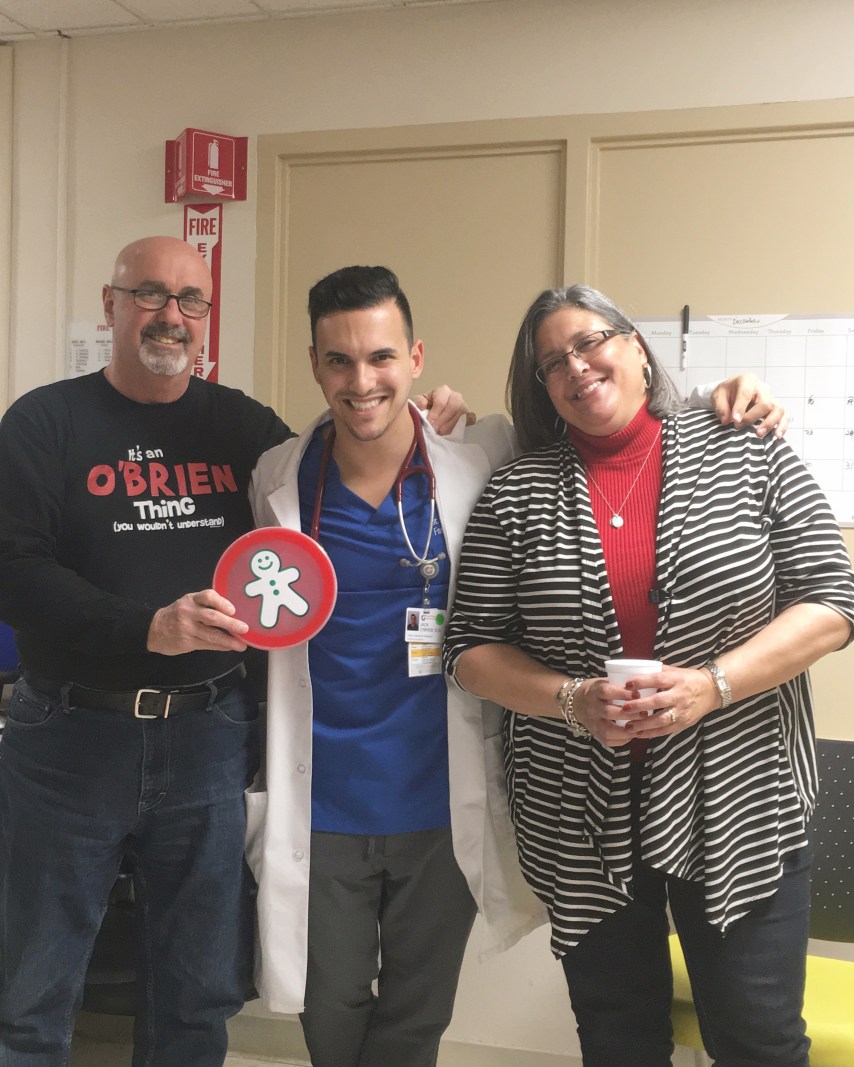
 Dr. Jack O'Brien